All material on this page: (c) Simone Santos TCI Seattle 2019
From Simone Santos
TCI Seattle
Submission 1
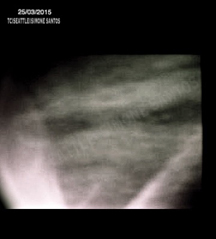
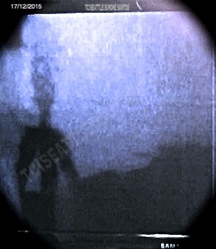
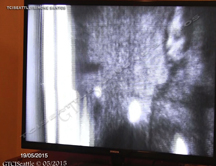
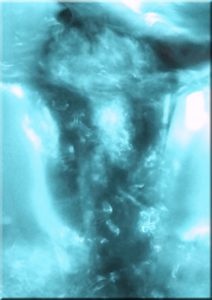
“We have a few images that look like non-human entities and we would like to show them to you.
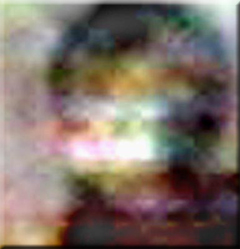
“Our bridge is through Timestream and our communicators are Roberto Gomes and Ana Luiza, since we started. All images were captured spontaneously, we didn’t ask for the spiritual team to form these images and they were mixed with the images we normally capture. Until today, we captured only these few images that for us look non-human. Why? We don’t know, but it’s a significantly small portion, compared with the ones that look human.”
“Funny thing, I originally said “Not ET”, but upon looking at it today when it came up in my news feed, my first impression was that it was a reptilian face that is somewhat familiar to me – I didn’t realize that I’d attempted this before.”
All material on this page: (c) Suely Pinheiro 2019
Suely Pinheiro
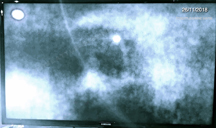
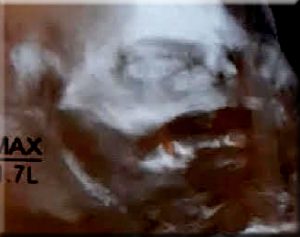
Suely uses the video-loop method with a Sony digital camera and a LED digital TV. She is Brazilian and has been researching and developing her ITC technique for more than 19 years.
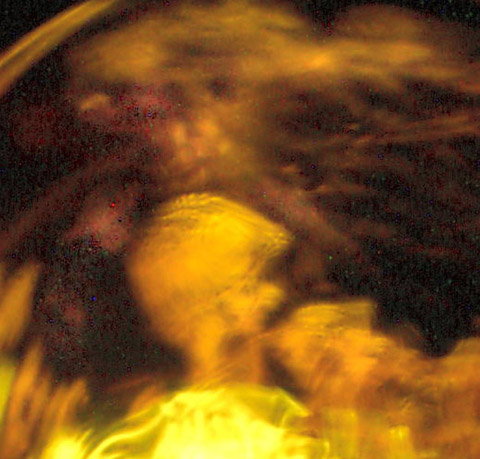
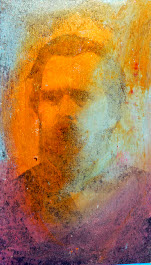
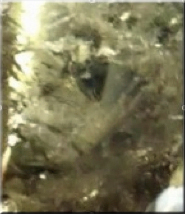
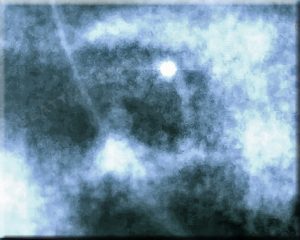
From Suely, “This image was not clear to me because of the features where I see nails in the hand that is on the left side of the face, big eyes and small mouth. I see something like teeth as well.”
All material on this page: (c) Amanda Jolliffe 2019
Amanda is a developing physical medium based in the UK. She lives in a 500-year-old house in one of the UK’s most haunted villages. She began studying ITC a few years ago.
Her technique
Submission 3
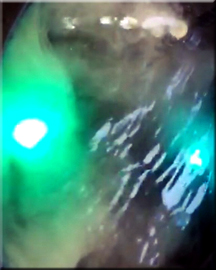
“I’ve experimented with most methods of visual ITC including a feedback loop but I’m finding that my current set up with a black bowl filled with water, small submersible LED lights and a fogging machine are producing the best definition.
As with most researchers, I have seen some pretty interesting stuff and the majority of faces/images I receive wouldn’t necessarily connect with ‘having once been human spirits’.
Submission 5
Of course, there are regular visitors, including what I guess is an individual who has a ‘v’ shape on its forehead. Although I see this image frequently haven’t yet been successful in capturing a really clear image but thought it worthy of mention in case you’ve encountered similar.
All material on this page: (c) Margaret Downey 2019
From Margaret
DSCN1994 MDowney-edit Light reflecting from moving water. Submission 2
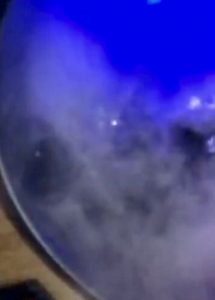
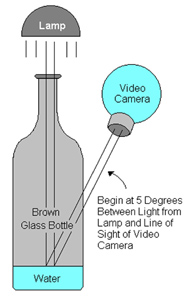
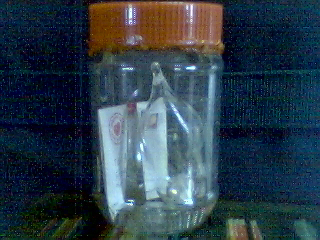
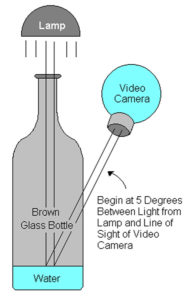
The attached blue image was received via a modified version of Earland Babcock’s bottle technique.* I take photos of a clear bottle, partially filled with water, backlit with a colored light strip, while gently rocking it back and forth to create movement on the surface of the water.
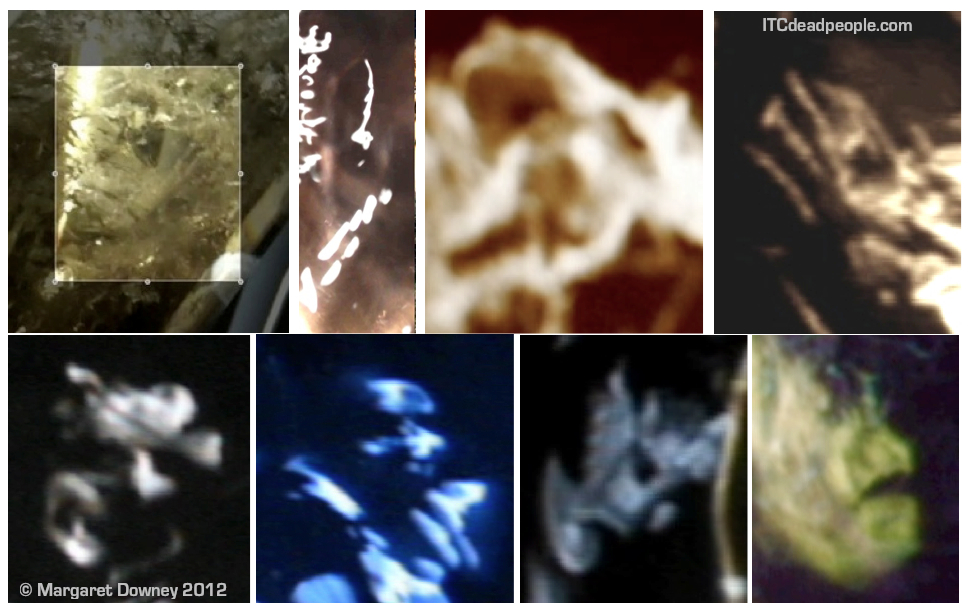
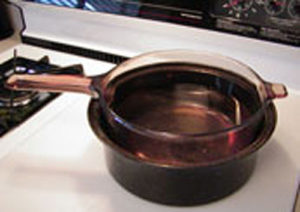
The images in the collage, except the upper left (which is a still photo of a crystal), were obtained via my original water ITC setup consisting of a translucent pot partially filled with water, suspended above an empty dark pot. With this setup, I create movement by wiggling my fingers in the water while taking video, or still photos. The light source is above the pot and the camera held at an angle.
These are images for which I feel my request for those “who never incarnated on earth” (or similar phrasing) to please show themselves have been responded to. I’ve been drawn to requesting ET images for many years.
* ATransC members were introduced to the method by Arthur Soesman.
From Tom and Lisa Butler
Association TransCommunication
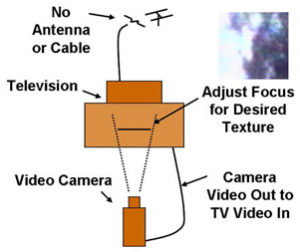
“For these examples, we used the Klaus Schreiber method for video Instrumental TransCommunication (ITC). We use a Canon 8mm ES2000 analog camcorder that is (most often) set about six inches from a Sony KV20TS32, 20 inch Trinitron color TV. The camera was typically focused well past the screen surface and the composite video out of the camera was connected to the video input of the TV so that the camera was “seeing” its output on the television screen in a video loop.
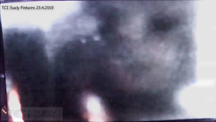
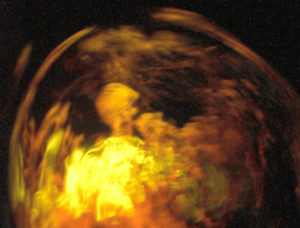
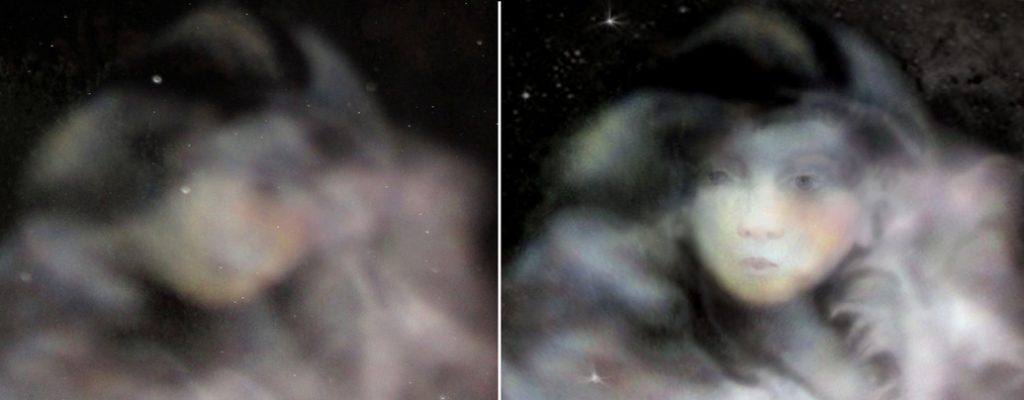
Submission 9 There appears to be a hairless head facing to your left and turned toward you. The head seems to be hung on the shoulders in an unusual way. It appears to be standing in front of a large round window.Submission 11 This appears to be a blue warrior wearing a dark fur collar, possible leather or metal chest plate, and dark sleeves. Ignore that secondary face near the warrior’s left ear. Such overlapping features are typical of visual ITC.Submission 12 There is some agreement between this and Submission 13. Only the contrast has been adjusted on the left. There is often a lot of clutter partially obscuring video-loop features. The obscuring background has been erased on the right. Note that it is possible important parts have been removed or unimportant parts have been left.Submission 13 There appears to be an insect-like being looking right at you.
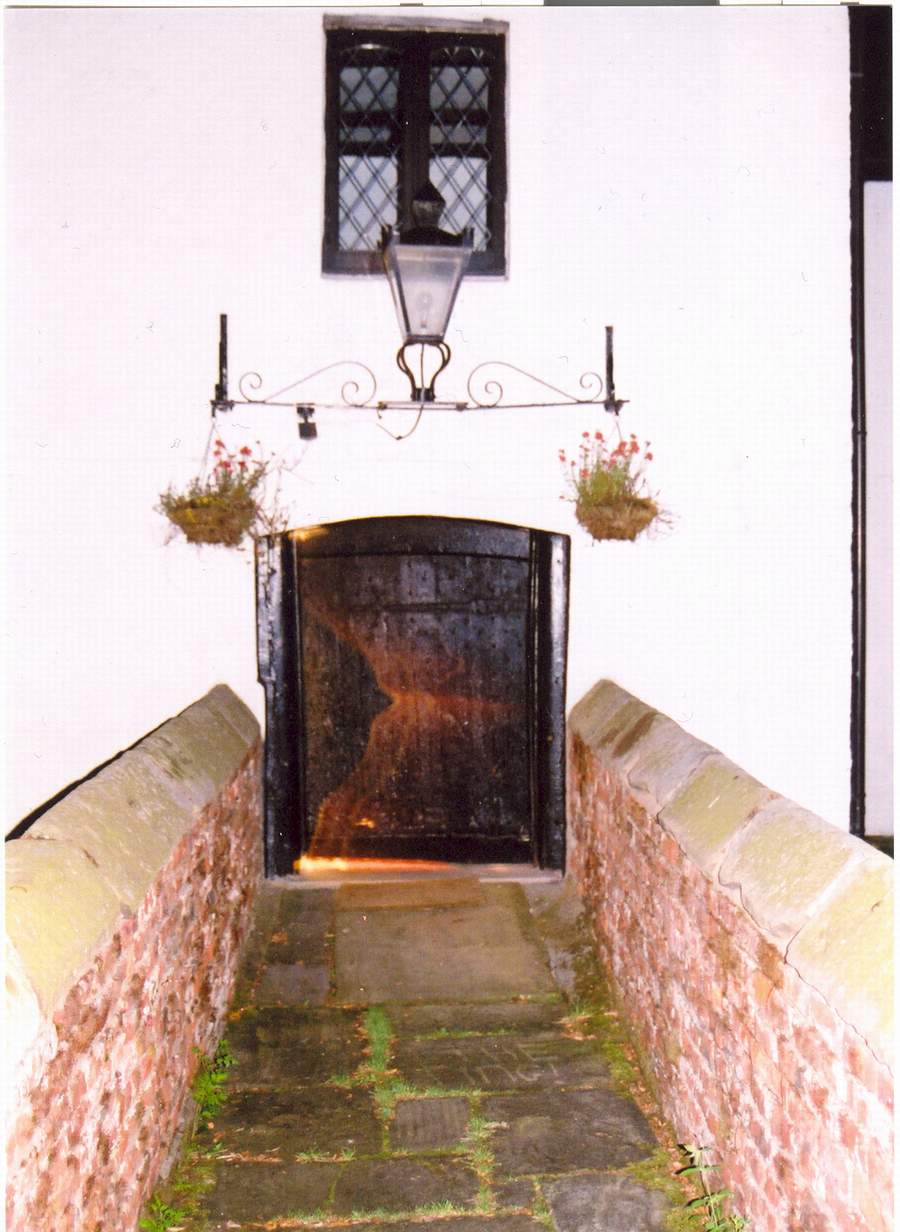
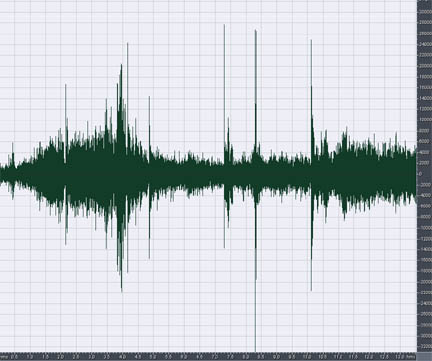
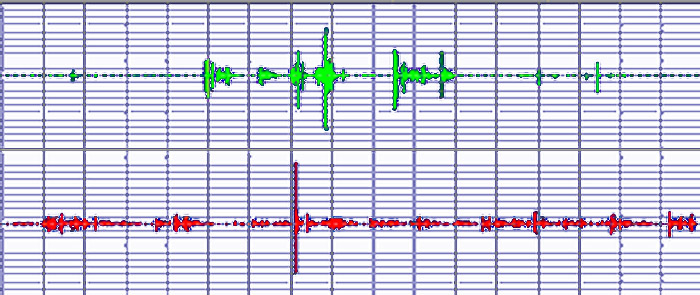
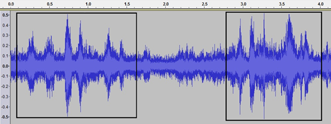
David Vee, who founded Ghosts-UK in 1987, sent us an interesting EVP recording in 2003. It was recorded on a mini disc in one of England’s most haunted castles. On the recording, you hear people speaking in what sounds like Medieval Latin and then you hear the definite sound of a drawbridge being raised (or lowered). The site did have a drawbridge but it was removed in 1550!
We have lost contact with David and cannot vouch for this example. We post the slightly enhanced recording here as a possible example of what are referring to as the “Stone Tape Theory.” Like this example, the idea of the theory is that inanimate object–rocks, the earth–might be able to retain information from the past such as activity in a room.
We do not know if the theory has merit. As of this time, we do not have a sense of how it might be integrated into what we think we do know about things paranormal.
Previously printed in the Spring 2008 AA-EVP NewsJournal
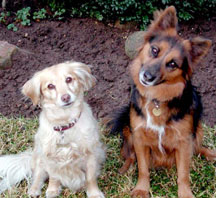
Darren Williams continues to hear from his dog, Fox. Darren’s partner, Alex, had a lucid dream in which Fox came running out of the darkness and there was a joyous reunion between the two. Subsequent EVP confirmed that it was really Fox and not just a construct of Alex’s subconscious. Because of this, Darren purchased the book by the famous lucid dream researcher, Stephen LaBerge. During a recording session, Darren talked to Fox in a conversational way, and when he was talking about dreaming, he recorded a young voice which he has come to know as Fox saying, “I’m reading your book with you.”
Darren wrote, “The message I could give to the people who lost their pet is that it’s a parting, not an end when someone we love dies. And it seems that something amazing happened to Fox when his physical body died—his consciousness, no longer bound by limitations of a canine brain, seems to have expanded to the point where human speech is possible for him. I think the departed communicate in a way that’s comfortable for us. From what Fox has told me, it was Tara, Alex’s dog who passed away several years ago, who taught Fox how to ‘speak’ to us.
“If we expect only to hear ‘woof woof!’ or ‘meow!’ from our departed animal friends, then I think that’s all we’ll hear. But Alex and I were always nutty enough to think that Fox could understand more than most people are prepared to believe. And for us at least, this has turned out to be true from a certain perspective. But I’ve had to accept that for most people, this is too much to ask for them to believe: ‘Your dead dog speaks to you? Get real—get therapy!’
“From EVP communication, we deduced that this lifetime is indeed very important. But it appears to only be a prologue for what follows in the life beyond—a life where all our loved ones await. For our own part, our EVP communication has become an integral part of our lives. To us it’s as natural now as speaking to friends on the phone. We’ve heard so much, so many comforting and astonishing things that, for us at least, challenge many preconceptions about the afterlife. Once I asked Marion, Alex’s departed mother, if there was any great revelation when she left this world for the next. The response was, ‘Just loving.’”
Sonia Rinaldi shared her response to a person grieving over the loss of a pet. Sonia wrote that when she first read about Dr. Anabela Cardoso’s contact with her beloved dogs, she couldn’t believe it and feels that few people would accept such an idea. Sonia ran her own experiments and says that she was “Fully surprised to hear clear contacts of beloved dogs speaking to their owners from the other side.” Sonia goes on to say that a good friend lost his parrot. The parrot had lived with the man for twenty-two years and the friend was so upset that Sonia risked trying to make contact with the parrot. She was astonished to receive forty replies. Sonia wrote, “I think that, in the future, experiments may change the view of humans about animals. Yes, apparently they are able to think and to express.”
Point of view of organizations People have a point of view, but organizations are composed of a community of people. While personality-typing (temperaments) is a way to model the points…
Article initially printed in the Spring 2005 AA-EVP NewsJournal Martha Copeland – All Rights Reserved Continuation of Signs from Cathy Yesterday at my Buford Presbyterian Church, in Buford, Georgia, I…
Paracoustics: Sound & the Paranormal White Crow Books, 2015, ISBN-13: 978-1910121535 This unique book examines that fascination and presents a selection of the leading research in paranormal acoustics together with an…
Parapsychology: A Handbook for the 21st Century Edited by Etzel Cardeña , John Palmer and David Marcusson-Clavertz McFarland, 2015, ISBN 978-0-7864-7916-0, ebook ISBN 978-1-4766-2105-0 This is a pretty big…
AA-EVP Publishing The ATransC has published four books as AA-EVP Publishing. These books are a set containing the Association TransCommunication website pages. The set has been compiled to preserve website…
Harrison Connections: Tom Harrison’s ‘Desire to communicate’ by Ann Harrison Saturday Night Press Publications, 2015, ISBN-13: 978-1908421111 From the website: Ann Harrison has given a personal and sincere account…
This is a list of links I frequently find myself looking for when I wish to provide a further reading reference. Use with great discernment! I do not necessarily endorse…
The ATransC is not focused on haunt phenomena and we make no claim of being particularly knowledgable about the subject. However, website visitor Dan Hall passed on some interesting links…
Also at https://ethericstudies.org/being-a-good-witness/ These practices are recommendations provided under the Creative Commons Attribution-Noncommercial- Alike 3.0 Unported License Sponsor Initiated by Tom Butler. Other editors include: Abstract It has been shown…
Also at ethericstudies.org/characteristic-test-for-evp/ These practices are recommendations provided under the Creative Commons Attribution-Noncommercial- Alike 3.0 Unported License Sponsor(s) Tom Butler Abstract There are a number of characteristics commonly associated…
Also at ethericstudies.org/classifying-phenomena/ These practices are recommendations provided under the Creative Commons Attribution-Noncommercial- Alike 3.0 Unported License Miner corrections 3-9-2021 Introduction to Classifying Phenomena A common dilemma in the study…
Also at ethericstudies.org/peer-review-or-vetting/ These practices are recommendations provided under the Creative Commons Attribution-Noncommercial- Alike 3.0 Unported License Also, See Failure to Replicate Fallacy, Survival-Related Media Review, and Rating and Peer Reviewed Online Journals…
Also see: Peer Review or Vetting? Abstract This article recommends a methodology intended to provide authors of articles on frontier subjects a means of producing reliable source articles while fostering…
Also see Open Letter to Paranormalists: Limits of science, trust and responsibility These practices are recommendations provided under the Creative Commons Attribution-Noncommercial- Alike 3.0 Unported License Abstract A panel is proposed…
Also at ethericstudies.org/research-practitioner/ These practices are recommendations provided under the Creative Commons Attribution-Noncommercial- Alike 3.0 Unported License Sponsor(s) Tom Butler Abstract To conduct research, it is necessary to have a…
Also at ethericstudies.org/scientific-method-itc/ These practices are recommendations provided under the Creative Commons Attribution-Noncommercial- Alike 3.0 Unported License Trans-etheric phenomena are thought to manifest as a subjective action causing an objective…
Also at ethericstudies.org/sharing-evp/ These practices are recommendations provided under the Creative Commons Attribution-Noncommercial- Alike 3.0 Unported License Sponsor(s) Tom Butler Abstract The phenomenal voices of Electronic Voice Phenomena (EVP) are…
These practices are recommendations provided under the Creative Commons Attribution-Noncommercial- Alike 3.0 Unported License Abstract The objective of this practice is to establish a meaningful measure which can be used…
Also at ethericstudies.org/control-recorder/ These practices are recommendations provided under the Creative Commons Attribution-Noncommercial- Alike 3.0 Unported License Sponsor(s) Tom Butler, Cindy Heinen Abstract It is easy to record environmental sounds that…
Also at ethericstudies.org/witness-panel/ These practices are recommendations provided under the Creative Commons Attribution-Noncommercial- Alike 3.0 Unported License Abstract One of the biggest problems in ITC is the difficulty practitioners have…
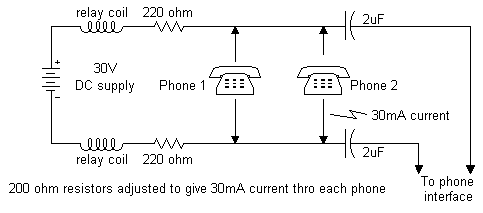
Also see: Recording EVP Using a Telephone and EVP Using VoIP and Telephones The above device permits the connection of a household phone (and phone line) to a tape recorder…
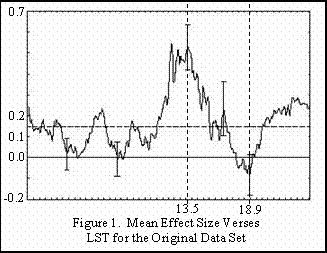
From the article: Apparent Association Between Effect Size In Free Response Anomalous Cognition Experiments And Local Sidereal Time, by S. James P. Spottiswoode, Cognitive Sciences Laboratory, Palo Alto, CA 94301. Published in The…
Binaural synchronization induced meditative state Previously published in the Spring 2008 AA-EVP NewsJournal Robert Monroe had spontaneous out-of-body experiences, which are well-documented in his books, Journey out of Body (Doubleday,…
Previously published in the Spring 2012 ATransC NewsJournal Several members in the Idea Exchange have been using recordings of foreign language as background sound for EVP sessions. What we refer…
Originally published in the Fall 2012 ATransC NewsJournal Also see: Phone Line EVP and Recording EVP Using a Telephone Recording for EVP using the telephone system has always offered tantalizing…
Debra Ann’s Telephone Recording EVP Using a Telephone Previously published in the Spring 2007 ATransC NewsJournal Also see: Phone Line EVP and EVP Using VoIP and Telephones Please note that…
Also see: White Paper on Transcommunication with emphasis on Electronic Voice Phenomena What is EVP? Electronic Voice Phenomenon (EVP) are intelligible voices found in recording media that have no known…
Audio recorders models on the market frequently change, and for this reason, we do not recommend particular recorder models. Instead, we will try to provide a list of recommended characteristics…
by David Mierzwinski (c) All Rights Reserved Previously published in the Winter 2006 AA-EVP NewsJournal Also see: Experimental Recording Techniques Using a Phototransistor For nearly a year, I have been conducting various…
by Zoë J. Robinson Originally posted in the Summer 2007 issue of the ATransC NewsJournal When I agreed to write this report back in January, I was hopeful of being…
From Spring 2001 AA-EVP NewsJournal Although we knew that Dutch Weisensale had been fighting cancer for quite some time it was still a very sad evening when we learned that he…
Originally published in the Winter 2004 ATransC NewsJournal The Encyclopedic Psychic Dictionary defines coincidence as, “1. (esoteric) (Carl Jung) two events occurring simultaneously, having no known cause-and-effect connection and unrelated…
Reported by Edgar Müller Originally published in the American Association of Electronic Voice Phenomena Fall 2006 NewsJournal Editor’s Note: A doctorate is required for full membership in the Parapsychological Association, a requirement…
Article initially printed in the Spring 2005 AA-EVP NewsJournal Martha Copeland – All Rights Reserved Continuation of Signs from Cathy Yesterday at my Buford Presbyterian Church, in Buford, Georgia, I…
by Tom and Lisa Butler Previously published in the Winter 2014 AA-EVP NewsJournal Forever Family Foundation 2013 Conference Bob and Phran Ginsberg’s daughter, Bailey, made her untimely transition in 2002….
Author, Larry Dean has been working on a book on Instrumental TransCommunication (ITC). Larry says that he was interested in spiritual pursuits at a very young age when others were…
Report on the 2006 AA-EVP Conference (The name of the association has since been changed from AA-EVP to Association TransCommunication) The conference was a complete success by all accounts. All…
by Becky Estep and read at Sarah’s funeral See also the Memorial article I want to thank each of you for being here today. At this moment, there are people…
See also the Becky Estep’s eulogy American paranormal researcher Sarah Wilson Estep made her transition to the other side due to kidney failure on January 3, 2008. She was the…
“If what you know about EVP is based on movies like White Noise or from television, then everything you know about EVP is very wrong. Please read a few of…
College Research paper by Thomas Wingert The Electronic Voice Phenomenon (EVP) is generally defined as the manifestation of sensible remarks of seeming paranormal origin on sound recording media, such as…
Excerpts from There is No Death and There are No Dead Dr. Konstantin Raudive, a psychologist, philosopher and Latvian then living in Sweden, read one of the Friedrich Jürgenson…
Summary Report Regarding Brief Events at the National Security Agency During the Mid-1980s Timeframe Pertaining to Remote Viewing And UFO Phenomena (Peripherally Involving Mrs. Sarah Virginia Estep – Former President of…
Previously published in the Summer 2007 AA-EVP NewsJournal In 2004, I applied for a research grant to the Bial Foundation to investigate whether or not EVP utterances could be related…
This study is suspended due to lack of participation by Tom Butler See: The Energy Profile of Transform EVP ATransC is seeking examples of Transform EVP that can be compared to supplied background…
This study is suspended due to lack of participation proposed by Tom Butler Previously published in the Summer, 2013 ATransC NewsJournal The study began with: Seeking EVP Examples for Study…
This study is suspended due to lack of participation Introduction We are asking you to participate in a study to see if the ease with which you collect Electronic Voice…
All material on this page: (cc) Creative Commons Attribute From Tom and Lisa Butler Association TransCommunication “For these examples, we used the Klaus Schreiber method for video Instrumental TransCommunication (ITC)….
All material on this page: (c) Phyllis Delduque 2020 From Phyllis Delduque “We have a few images that look like non-human entities and we would like to show them to…
All material on this page: (c) Margaret Downey 2019 From Margaret The attached blue image was received via a modified version of Earland Babcock’s bottle technique.* I take photos of a clear bottle,…
All material on this page: (c) Amanda Jolliffe 2019 Amanda is a developing physical medium based in the UK. She lives in a 500-year-old house in one of the UK’s…
All material on this page: (c) Suely Pinheiro 2019 Suely Pinheiro Suely uses the video-loop method with a Sony digital camera and a LED digital TV. She is Brazilian and has…
All material on this page: (c) Simone Santos TCI Seattle 2019 From Simone Santos TCI Seattle “We have a few images that look like non-human entities and we would like to…
Pictures from the Summer 2002 AA-EVP Newsletter Also see Butler ITC Gallery 1, Butler ITC Gallery 3, Perception of Visual ITC Images and Video-Loop, Visual ITC Recording Technique We have continued to receive interesting…
Pictures from the Winter 2003 Also see Butler ITC Gallery 1, Butler ITC Gallery 2, Perception of Visual ITC Images and Video-Loop, Visual ITC Recording Technique Collecting photographic quality Video ITC features…
Previously published in the Fall, 2004 ATransC NewsJournal (Vol. 23, 4) Last quarter, we described how Arthur Soesman of the Netherlands was able to capture faces with a video camera…
Previously published in the August 2008 ITC Journal: www.itcjournal.org Since 1998, I have received several Direct Radio Voice (DRV) communications from a little voice that identifies itself as Nisha’s, one…
Promised to Make Contact with a Secret Phrase During our last sitting with the Circle of the Silver Cord, David Thompson once again brought through Konstantin Raudive. He told…
In this first example, we were recording in one of the cell blocks at Alcatraz. You can hear Lisa say, “You can speak on this device.” Immediately after that, one…
Also see Butler ITC Gallery 2, Butler ITC Gallery 3, Perception of Visual ITC Images and Video-Loop, Visual ITC Recording Technique About the Butler Video ITC technique We have captured the…
John Belushi We were invited to help Universal Pictures to help them market the movie, White Noise. For the DVD release party that was held in the famous and haunted…
Note, this would be an example of Type II ITC as described in the Classification Best Practice The Reverend Catherine Stewart of the Spiritualist Desert Church in Las Vegas, NV…
Visual ITC can be encountered in many different ways. The common denominator is the availability of chaotic light somewhere in the field of view of a camera. For instance, the…
Diana and Alan speaking at the 2006 ATransC Conference. Also, see Diana and Alan Bennett- ITC and Diana and Alan Bennett – Crystal Imaging Extracted from Winter 2002 The Spiritual…
We have been so inspired by the amazing results of Diane and Alan Bennett, and their results from reflecting light off of crystals, that we had been wanting to also…
Published in the Spring 2006 AA-EVP NewsJournal Shortly after his return home from a modeling job in Europe, Teri Daner introduced her son, Geoff, to Kay Rosaire, a famous animal…
Previously printed in the Spring 2007 AA-EVP NewsJournal Recently, our little dog, Fox, passed away from cancer. We were absolutely devastated since we had an unusually strong bond with him….
Published in the Summer 2007 AA-EVP NewsJournal Debbie Sheppard recalls that about three years ago, every now and then she would look at a clock, cable box, microwave, stove, cell…
A contemporary choice for coping with grief Tragedy, such as the death of a loved one or dear friend, may often strike unsuspected and at the most inopportune timing. It…
Originally published in the Spring 2003 AA-EVP NewsJournal Martha Copeland and Karen Mossey know that not only are their children together on the other side but that their children are…
First published in the Summer 2012 ATransC NewsJournal My life was about to change with new understanding. I was to sit in a materialization séance with David Thompson. David first…
Previously published in the Fall 2010 ATransC NewsJournal I am sure that many members communicated with or met George Wynne who was very active within the Association. George used EVP…
Published in the Spring 2009 ATransC NewsJournal Denise Snyder-Papier wrote: “My son, Jerome, was killed by a hit-and-run driver on September 17, 2003. It has been my goal to remain…
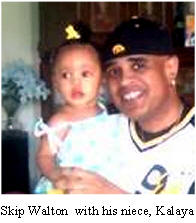
Published in the Summer 2006 AA-EVP NewsJournal In May, 2005, Melissa Bailey’s father, David “Skip” Walton, was diagnosed with stomach cancer. He was forty-nine years old. The picture of Skip…
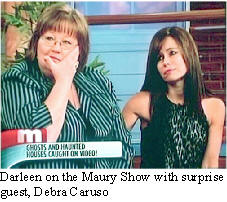
Published in the Winter 2008 AA-EVP NewsJournal Darleen Addis thought that she had heard the voices of her daughter, Jenny, and son-in-law, Brandon, for the last time on September 26,…
Previously published in the Winter 2005 ATransC NewsJournal We have published several articles on the work of Brazilian ITC researcher, Sonia Rinaldi. Sonia has been helping people by making phone…
Previously printed in the Spring 2008 AA-EVP NewsJournal Darren Williams continues to hear from his dog, Fox. Darren’s partner, Alex, had a lucid dream in which Fox came running out…
Other SORRAT Articles SORRAT History and Background The Fishharp Full I. Grattan-Guinness Article SORRAT Examplesgroup (This article) Its All About Intentionality FEG Blog: SORRAT – A Long Term PK Study The…
Published in the Winter 2012 ATransC NewsJournal While we were in England, we had the wonderful opportunity of visiting the Silver Fox Circle in Newcastle on Halloween night. We were…
Published in the Fall 2010 AA-EVP NewsJournal Precipitation medium Hoyt Robinette was invited by the Spiritualist church in Reno to speak and demonstrate his mediumship. We attended the Sunday service…
First published in the Fall 2010 ATransC NewsJournal In August, we had the wonderful opportunity to fly to Frankfurt, Germany to sit with the Felix Experimental Group. The physical medium…
by Lisa Butler A Report on the September 25, 2009 Séance, Winter 2010 ATransC NewsJournal Over the years, we have heard about a materialization medium named David Thompson. He was conducting…
From Viewpoint, Spring 2003 AA-EVP NewsJournal Attitude is everything. Attitude is an expression of our worldview, and it is our worldview that we use as a mold to build our…
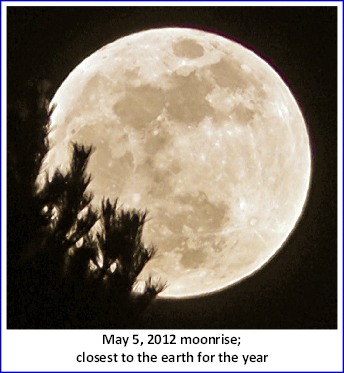
First published in the Summer 2012 ATransC NewsJournal The Moon Imagine the wonder the moon must have held for our ancestors. For many, even an understanding of the clockwork mechanism…
First published in the Winter 2011 ATransC NewsJournal Stewart’s website is: stewartalexandermedium.com/ Cober Hill is a conference center developed around an old estate near Scarborough, on the north-east coast of England….
First published in the Winter 2011 ATransC NewsJournal Also see The Stewart Alexander and Friends Conference at Cober Hill Stewart’s website is: stewartalexandermedium.com/ In October, we traveled to the Cober Hill…
First published in the Summer 2011 ATransC NewsJournal Other SORRAT Articles SORRAT History and Background The Fishharp Full I. Grattan-Guinness Article SORRAT Examples Its All About Intentionality FEG Blog: SORRAT –…
First published in the Summer 2011 ATransC NewsJournal Other SORRAT Articles SORRAT History and Background The Fishharp Full I. Grattan-Guinness Article SORRAT Examples Its All About Intentionality FEG Blog: SORRAT –…
On May 29, 2011, I was extremely fortunate to have been invited to attend a demonstration of deep trance and physical materialization mediumship by the Felix Experimental Group from…
Abstract Spontaneous communication across the veil has been characterized as After death Communication (ADC) and Induced ADC for the Botkin method of EMDR. ATransC does not use “death” as a…
(Published in Society for Psychical Research Paranormal Review, No 55 p 3-7, July 2010) The Experiment In 2008 Gronowicz et al. reported on an experiment demonstrating the positive effects of…
Spiritualist Phenomena in the Media The Reverends Lisa and Tom Butler, NST write a column for The National Spiritualist Summit magazine. The column includes a review of the media for…
Published in the Winter 2003 AA-EVP NewsJournal World events are very unpredictable these days. If we think about it, this is often the case, as we never really know what…
Transcript of portions of the séances pertaining to metaphysical concepts. First published in the Fall 2013 ATransC NewsJournal Spoken by Hans Bender via the mediumship of the Felix Experimental Group:…
This is part of the Implicit Cosmology essays associated with the Trans-survival Hypothesis. It has been incorporated into a book titled Your Immortal Self. Some potentially important changes have likely been made to this essay…
The Survival Hypothesis hold that we are an etheric entity in a symbiotic relationship with a physical body. It is through this etheric-physical entanglement that we are able to bring…
First published in the Summer 2011 ATransC NewsJournal Other SORRAT Articles SORRAT History and Background The Fishharp Full I. Grattan-Guinness Article SORRAT Examples Its All About Intentionality (this article)…
Further Reading: Formation of EVP Abstract Electronic Voice Phenomena (EVP) can occur in a number of different ways. Knowing how the voices are formed, or at least where in the…
by Douglas M. Stokes (Previously published in the Society for Psychical Research April 2009 Paranormal Review) In these pages (Stokes, 2004) and elsewhere, I have argued for the existence…
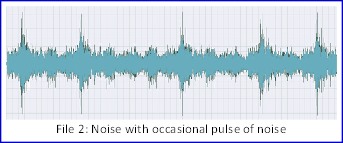
(As published in the Summer 2002 AA-EVP NewsJournal.) Many of our members have talked and written to us about a noise that is often heard right before an EVP message. …
Seeing Both Sides: The arrow of creation is at the center of the dispute concerning the validity of EVP by Tom Butler, (cc)2001 There is a common thread that runs throughout any discussion…
by Tom Butler Scope Many of the articles on this website address the who, what, how and why of trans-etheric influences, including EVP and ITC, but they are mostly concerned…
(Based on a Summer 2005 AA-EVP NewsJournal article) Updated May 2015 Abstract Can discarnate personality communicate with people in different parts of the world by hearing (sensing) a question from…
First published in The Journal for Spiritual and Consciousness Studies. November 2017 (ascsi.org/) Abstract This is an explanation of the model being considered by the Association TransCommunication (ATransC) to help study…
Part I Published in the Winter 2013 ATransC NewsJournal Read Part 2 and Part 3 Introduction Anyone who has listened to even a few EVP recordings knows how difficult they…
Republished from NeuroQuantology | September 2012 | Volume 10 | Issue 3 | Page 492-514 Please see the entire article at citeseerx.ist.psu.edu/viewdoc/download?doi=10.1.1.988.4953&rep=rep1&type=pdf Abstract A relatively novel acoustic phenomenon has inundated…
Part II A Research Study into the Interpretation of EVP A Second Study of EVP Interpretation Published in the Spring 2013 ATransC NewsJournal Read Part 1 and Part 3 Introduction In…
The most common explanation for the source of the voices in EVP that is offered by people who have not studied the evidence is that they are caused by the…
Abstract A common explanation for Electronic Voice Phenomena (EVP) is that the reported utterances are mundane sounds mistaken as voice forming words. This report describes three online listening trials that…
by Tom Butler Previously published in the Fall 2012 ATransC NewsJournal Abstract A frequent source of consternation for people who are asked to listen to EVP examples is their failure…
by Tom Butler Previously published in the Fall 2011 ATransC NewsJournal Abstract Based on a number of recent demonstrations by multiple practitioners, ATransC commissioned a study to determine the suitability…
Abstract This twelve-month trial was designed to determine whether or not information not known to a participant could be requested and received via Electronic Voice Phenomena (EVP) using EVPmaker with…
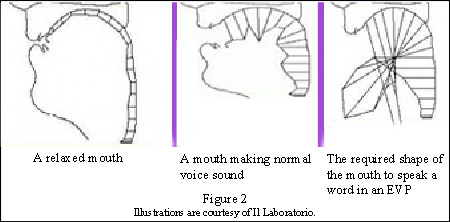
“SFINGE” PROJECT” Previously published in the Winter 2014 ATransC NewsJournal (Digested by ATransC. See: Interdisciplinary Laboratory For Biopsychocybernetics Research [Defunct]) Abstract The research team of Il Laboratorio from Bologna, Italy…
Originally printed in the Spring 2001 AA-EVP NewsJournal There is some evidence that at least a few of the messages we record in EVP, may actually be put there by…
by Rachel Browning This is a digested version. The full report may be read at evp-voices.info (closed) Previously published in the Fall 2013 ATransC NewsJournal Introduction The following article documents the…
An Empirical Study on the Psychological Aspects of Interpreting Electronic Voice Phenomena by John E. Buckner and Rebecca A. Buckner Previously published in the Skeptic Magazine Vol. 17, No. 1, 2012 Introduction A common…
Originally published 2020 as Blog Opinion 11 at ethericstudies.org
This study has been discontinued.
Abstract
The first part of this essay includes an in-depth discussion of the nature of visual ITC. Emphasis is on transform phenomena that are collected as apparently paranormal features formed in visual noise. The more common characteristics are described, including some photographic examples. This introduction is used as preamble to describe the Extraterrestrial Visual Instrumental TransCommunication study (ET Visual ITC Study). The grading form and a brief introduction to the submissions are also provided. You, the reader, are asked to help with the study as a citizen scientist.
Visual ITC
This essay is to explain the Visual Instrumental TransCommunication (ITC) study of possible Extraterrestrial (ET) beings. The study is named ET Visual ITC Study. ITC is discussed first because many readers may not be familiar with the more common characteristics of transform visual ITC.
Important to this discussion is the idea that a person is an immortal personality entangled with a human avatar for this lifetime. In that view, psychics and mediums are functionally the same, the difference is that a medium purposefully seeks to communicate with discarnate personalities. However, both mediumistic and psychic access of information are modeled as trans-etheric influences.
Also important is the idea that the objective formation of the visual and audible features of ITC is a transform phenomenon. That is, optical or audible chaotic noise is transformed into visual features or audible speech as the expression of intended order.
Instrumental TransCommunication
Transcommunication is a term used to describe communication between nonphysical and physical aspects of reality. Mediumship is transcommunication, as is psychic functioning. Instrument aided transcommunication is referred to as Instrumental TransCommunication or ITC.
Limits of Acceptability
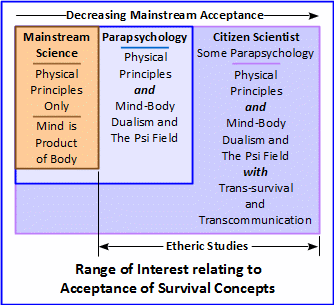
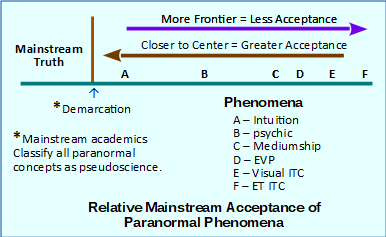
To understand the limits of this study, it is important to understand the factors affecting the perception of visual ITC examples. As illustrated in the Relative Mainstream Acceptance of Paranormal Phenomena Diagram, the farther a concept is out on the frontier of knowledge, the less it is accepted by mainstream society. However, there are degrees of acceptability.
Intuition is generally accepted as an oddity of human nature and usually not closely scrutinized. Psychic functioning is widely accepted by parapsychologists if it is explained in terms of physical principles that may need to be expanded. Fewer parapsychologists accept any explanation for psychic functioning that requires duality, meaning mind is not a product of biological brain.
Psychic phenomena do not require continuation of personality after bodily death (survival hypothesis). Mediumship does, as it is presumably communication with discarnate personalities. The requirement of the survival hypothesis separates most parapsychologists from virtually everyone who thinks their ITC examples originate from dead people. Certainly, mainstream academia decisively discounts survival as pseudoscience (false science).
From my experience presenting audio and visual forms of ITC to audiences which included laypeople and academics, it has become clear that EVP might be acceptable as a strange hypothesis but visual ITC is so far out there that I have been repeatedly advised to stop talking about it lest I lose all credibility.
Thus, I have been reluctant to present examples of possible ET visual ITC. My assumption is that, if clearly human faces are not credible, clearly alien faces are beyond reason.
The point that needs to be understood for this study is that it is as far out on the frontier of knowledge as one can be. When you talk of this study with your friends, be sure to us objective terms such as study rather than believe.
About Visual ITC
The first question that needs to be answered is if examples of visual ITC are real or illusion.
The most common comment I hear in reference to visual ITC is that the examples are just pareidolia which means our mind is playing a trick on us and causing us to see patterns where there are none. Researchers often argue that people who believe in the existence of things paranormal are prone to pareidolia. However, virtually all of the research I have seen seemingly ignored the effect experiencing paranormal phenomena has on a person’s openness to future paranormal encounters.
ITC researchers do need to be familiar with Gestalt Psychology which holds that our mind naturally seeks to see relationships. For instance, three dots are likely seen to define a triangle. If someone is looking for a face in noise, three dots are almost automatically seen as two eyes and a nose.
The challenge is to find a way to certify that a proposed example of visual ITC is actually paranormal and not an accidental, naturally occurring arrangement of noise.
The “What do You See” Study
The first test for any paranormal phenomenon is to see if others can experience it in the same way without being told what to experience. In other words, is it objectively real or a mental experience?
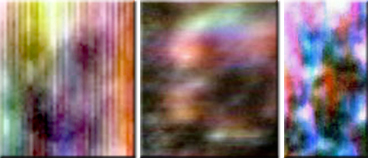
We (ATransC) conducted an online “What do You See” visual ITC study. In 2016. In the Perception of Visual ITC Images report, you can see that of seven examples, the example with the highest agreement was a dog (left above) and a profile of a person (center), both at 81% agreement. At 28%, the least agreed on examples appeared to be a man’s torso (right), perhaps in ancient Asian garb. Based on these findings, it is arguable that at least some visual ITC examples exist as objective phenomena.
Characteristics of Visual ITC
The influence of thought on physical processes is modeled here as the expression of intended order. This comes from studies indicating that the output of Random Event Generators (REG) tends to become less random (increasing order) under the influence of attention or in proximity with a meditating person. For ITC, this effect is referred to as transform since the increasing order tends to assume intelligible shape.
The transform effect has been found to be more evident in the way visible features or discernable speech is sometimes found in chaotic noise. Thought is a conceptual process and physical noise is a physical, objective process. The model used here is that thought acts on the nonphysical concept representing the physical noise.
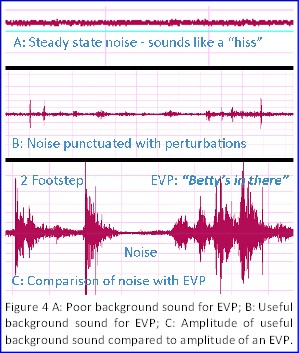
For instance, white noise is very deterministic in that each next sample is presumably as random as the preceding sample. The randomness of the signal is a very stable concept. By comparison, chaotic noise might be based on white noise, but is randomly punctuated by spikey noise to make it more unpredictable. The related concept is very indeterminant; not just random but random in a chaotic way.
We see this trans-etheric influence in the way visual ITC features tend to form in the mid-bright-dark, medium-texture regions of a photograph or video frame. Very dark and light are much more determinant, and of course, it is difficult to discern detail in saturated regions.
Transform rather than opportunistic examples
This study requires examples that are reasonably well-defined and that are decidedly paranormal. Opportunistic examples such as those that require distortion of the faces of living models or actual photographs cannot be accepted. A face found in vapor probably cannot be used because it will likely not be well enough defined. Faces found in mirrored images cannot be used because their paranormality is in question.
Holographic effect
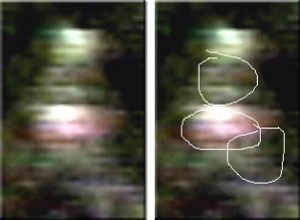
In visual transform ITC it is common to have the same space occupied by more than one feature. For instance, the pixels forming the eye of one face might also be used to form the nose of another. The video-loop example here appears to be a small man with a hat. He is looking directly at you. There is a less well-formed face-like feature on the man’s hat, also looking at you. If you look closely in the third circle, there is a face-like feature forming a head looking toward your right shoulder. Not really visible in this example are many even less well-formed face-like features in the picture. (Note that the primary face seems to be appropriately colored.)
The best way I have found to describe this holographic effect is that we are impressing images representing our version of personalities in our etheric space of which we are unconsciously but not consciously aware.
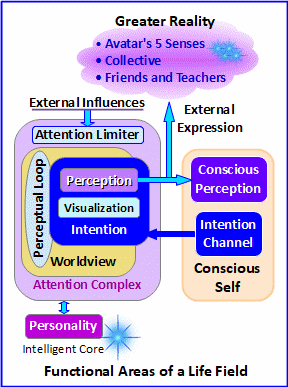
In the Implicit Cosmology, I describe reality as life fields and their expression. We are not in our body. We are entangled with our body by way of what I refer to as the Attention Complex. Think of that as the seat of our mostly unconscious mind and where our perception and expression are formed. (That is where we share our worldview with our human avatar.) Refer to the Functional Areas of a Life Field Diagram on the right.
It is also argued in the Implicit Cosmology that we are the conduit for trans-etheric influences. That means we are mediumistically forming the ITC features by expressing intended order as informed by other communicating life fields. We and they are in the same space. Some of them have a body like us but most do not.
Although there appears to be no distance in etheric space, there is perceptual separation so that a life field I might be mediumistically aware of will seem close or distant, depending on the degree of rapport I have with it.
I am more aware of life fields that are perceptually close to me (greater rapport). Compare, for instance, the cousin I only met once years ago and my transitioned father. My link of rapport is much weaker with my cousin than with my father. Yet, I may unconsciously be impressing both as ITC. My cousin would be a very poorly formed feature if visible at all while my father’s would be much more apparent.
Because of our human’s instincts, we associate first the eyes and then the face with who a person is. In that way, it makes sense that we will more frequently transform noise into eyes, the top of faces and the rest in that order.
You may not be consciously aware of the personality associated with the face feature. Remember that, in this model, we are immortal and have likely had many lifetime experiences in this and other venues. Rapport is a perceptual link and not a physical one. We may well have greater rapport with a loved one from a prior lifetime than with anyone in this.
Please be mindful that this is a theory.
Visual ITC is a physical, two-dimension representation of three-dimension etheric space
Remember that, when examining examples of visual ITC, what we see is limited by our technology. If the greater reality is conceptual and without distance, and that is our natural habitat, our mental expressions of intention influences the technology in ways that we probably do not completely understand (yet).
The technology can only display in ways it has been designed. For instance, camera lens refraction index is selected to pass visible light frequencies. That means they tend to filter out frequencies that fall outside of their design range. If the communicating entity did produce far-infrared or ultraviolet, the camera—even modified ones—will probably not detect their light.
The same goes for the three-dimensional world of moving water and the two-dimensional world of the camera. We do not know what is being lost in the translation. When we see a face in the noise, are we just seeing that part of the face that is in focus?
As we examine our loopback video one frame at a time, we routinely rotate them in 90 Degree increments. Features are often difficult to make out and they do not easily register as a face when seen upside down or sideways.
Over the years, EVP experimenters have experimented using higher or lower than audible frequencies. Some have even decided that an example is not real unless it was recorded in the ultrasonic or infrasonic ranges. This ignored the fact that they had to convert the signal to the audible range for their recording equipment.
After years of examining the various theories and technologies—trying many ourselves—we made the executive decision that our communicators will communicate with us wherever we are looking so long as the physical conditions are right and the mental state of the practitioner or an interested observer is right.
Techniques
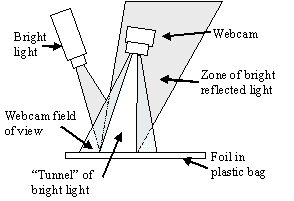
The common factor in both audio and visual transform ITC is the availability of chaotic noise. Chaotic noise is produced in the light reflected from moving water technique by agitating the water. Arthur Soesman introduced the ATransC to the technique by suggesting a colored jug partially filled with water. Photographing the moving water sometimes produced ITC.
From Arthur SoesmanColored pot containing water inside black pot as used by Margaret Downey.King? water technique by Butlers
I seldom pass up the opportunity to share Erland Babock’s light reflected from moving water example of the elfin children. Erland is transitioned now, but as we knew him as an ATransC member, he was one of the most competent ITC practitioners we knew. In this example, he used a brown glass jug in the Arthur Soesman technique. If you look closely, you will see two children, apparently wearing translucent mushroom-cap hats. Their back seems to be turned against a wind. Depending on how you focus on the features, there appears to be a small dog in front (downwind) of the smaller child. Above the taller child, and facing toward you, is a large creature not unlike the Star War’s Chewbacca. His hair is blowing in the wind. He appears to be watching over the children. Fanciful imagining? Maybe, but I always feel drawn to the scene as the better part of humanity.
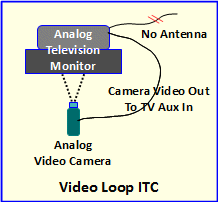
As far as we know, the video-loop feedback technique was developed by Martin Wenzel for Claus Schreiber. It involves a video camera set to record what is on a television screen. The output of the camera is fed into the Aux In of the television so that what the camera has just recorded is displayed on the screen. The result is a video loop producing very chaotic noise. While a television set tuned to a blank channel will produce
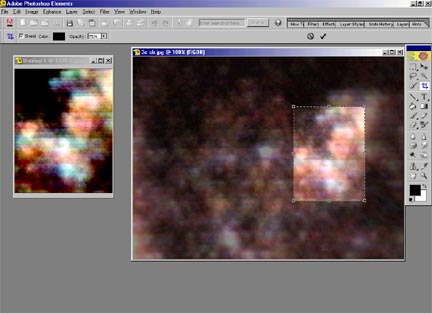
Examining a single frame grabbed from a video-loop session. The apparent woman with headscarf on the left was selected from the frame on the right and highlighted in place using contrast control. Taken by the Butlers.
snow-noise, looped video is chaotic with regions or order emerging in a very fast-moving display.
Look at my avatar at the top of my online biography. Then find that same feature in the video frame at the bottom of that page. That video frame is one of 30 per-second the camera makes during a session. Each promising frame (not all white or black) is examined, often turned upside down and sideways, as the features may show up anywhere. Most are difficult to find.
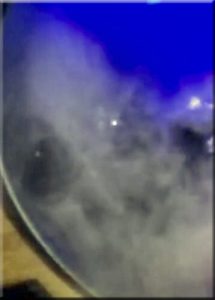
The left image is breath vapor photographed against the night sky. The vapor is gray-white in color, but as with rainbows, color is produced by light from the camera flash reflecting off of the water droplets. At right is the same image but enhanced by Christine Dennett (kesara.org). Example recorded by Christopher J. AbbottBreath vapor is photographed against a nighttime (dark) sky.
Vapor is sometimes used. Breath is used in the example shown here but vapor from an ultrasonic humidifier or even steam is sometimes used. The objective is to find paranormal shapes in photographs of the vapor.
Man sitting on an easy chair, left hand on the left armrest. He is wearing an unbuttoned dark red jacket that has piping around the buttons and collar. The jacket has a high, stiff collar that is close to the throat. He apparently has short dark hair and is facing to his left side. His face is slightly lifted as if appealing to God. His left hand either has six fingers that are more serpentine than bony, or he has a very large ring on his index finger. He is either holding something like the neck of a guitar in his right hand and close to his chest, or his right hand is alone and has six fingers; however, if fingers, they appear to be bony.
Any source of chaotic noise is apt to produce ITC. In a photograph of a room, the medium-density regions sometimes have poorly formed features. JPEG compression noise often produces ITC. Technically, clouds photograph as chaotic energy. Interestingly, the glass surface of an old tube-type television screen sometimes produces reasonably well-formed features.
The example shown at the right was found on the screen of a turned-off rear-projection TV. Mr. D, as the owner of the pictures wanted to be identified, was experiencing a cluster of paranormal experiences, mainly orbs that were harassing his dog. He was trying to take a picture of an orb and found this man in his picture.
It is clear that even some of the most exotic visual ITC techniques are no more than novel ways of producing chaotic energy for transform ITC formation. Each technique has different advantages and disadvantages.
Video-loop can be expensive, and it is often difficult to establish useful noise. Resolution of the resulting features is limited by the resolution of the equipment meaning that they are often difficult to make out. Using mostly color analog equipment, we have color results. However, it is difficult to achieve a suitable video loop with color using all digital.
Moving water is easy to set up and any camera, light source and agitation technique will work. The results tend to be fewer features and they can be very distorted. Other than cost and ease of use, moving water results tend to be of higher resolution if a high-resolution camera is used.
Vapor techniques suffer from lack of definition. The extreme example is faces in clouds. While some may be paranormal, they are almost always too vague unless they are “enhanced” with art.
Do all we can to provide the most accurate and up-to-date information about all things etheric. While we do not know what will be seen as true in the future, we will attempt to identify what on this website is supported by empirical evidence, what is speculation and what is common knowledge.
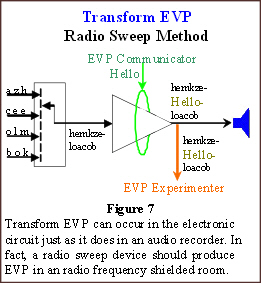
After considerable study, personal experimentation and a lot of soul searching, we finally announced that radio-sweep probably did not produce EVP as designed but may inadvertently produce the occasional transform EVP in the resulting noise. If radio-sweep does produce EVP, it would be of the opportunistic kind and the techniques should be considered so full of false positives that it is useless for serious study.
In this essay, it is necessary for us to say that some popular techniques do not appear to produce visual ITC as intended but may inadvertently produce some possibly paranormal features in the resulting optical noise. In such techniques as using a photograph or even an actual person as the model for supposed transfiguration, and then partially obscuring the model with a translucent, often shiny or glittery cloth, the practitioner claims the resulting optically vague features are actually transfigured by a communicating personality. Rather than transformed features, techniques like this depend on creating vision-confusing ambiguity by obscuring a live form.
Using a mirror tool to fold parts of a photograph back on itself is a popular technique to produce face-like features out of the resulting symmetry. The claimed faces are virtually always ET-looking. They are artifacts of the technique and our human’s tendency to see just about any three dots as two eyes and a nose if they are symmetric. Without further research indicating the contrary, we must consider the mirror technique a simple sleight-of-hand parlor trick.
There are other questionable techniques we see around the Internet. In many cases, there is some support to think they may produce ITC, but in most cases, there is not enough study to know the difference between naturally occurring artifacts and actual paranormal phenomena.
Any technique for the collection of ITC examples needs to be supported by at least some study using well-considered protocols. We are happy to be proven wrong. Just show us the study reports.
The ET Visual ITC Study
The above information is intended to give you a sense of the nature of visual ITC. Except for the uninformed, the paranormality of visual ITC is not in question. However, the phenomenon has both a physical technology aspect and a mental aspect. We know examples are objective in that many people can share in the experience, but we do not understand the extent to which consciousness influences their formation and the witness’ experience.
The Implicit Cosmology model has been successful in describing many known characteristics of apparent paranormal experiences. The model predicts that the practitioner or an interested observer provides the conduit through which a psychokinetic influence is impressed on chaotic noise to produce an intended order. We do not know how much of the person’s worldview influences the final image, but based on current science, it is reasonable to argue that what we consciously experience is only a version of actual reality as it is colored by our worldview.
The Implicit Cosmology predicts that some of the external influences come from other minds. The Survival Hypothesis predicts that some of those other minds are discarnate personalities. The question of whether some examples of visual ITC represent real people is not settled science; some or all may be an objective product of our imagination.
The existence of Unidentified Flying Objects (UFO) of ExtraTerrestrial (ET) origin remains an open question. Finding apparent ET faces from visual ITC sessions is doubly dubious as far as science is concerned. To explore the possibility that some of those other minds are associated with persons living on other planets, we began a study for the ATransC titled the ET Visual ITC Study. The website is https://et-visual-itc-study.atransc.org/.
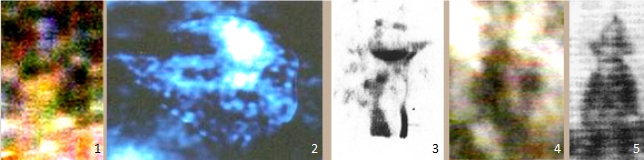
In a way, the study began quite a while ago. I put together the panel of five possible ET features shown above shortly after we assumed leadership of the ATransC. But back then, we hesitated to talk much about the ET aspect of ITC because we felt doing so would compound the confusion about an already confusing phenomenon.
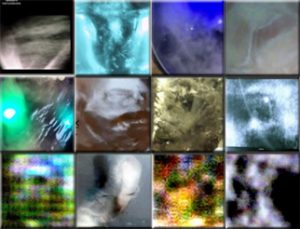
Number (1), the “Blue-Faced Knight” example on the left was recorded by Lisa and me with a video-loop. He appears to be wearing an armored vest with shoulder guards. His collar is full-bodied, as if it is made of fur. He may be bald or have a very high forehead. His skin is decidedly blue.
Color in our video loop examples often seems to correctly represent the model for the example. Thus, we feel the blue is both unique for our examples and as intended by the source personality. Consider the way Hindu Gods are portrayed with blue skin. From Why are Hindu Gods Blue-skinned? we see that the Hindu god’s blue skin is apparently a relatively recent representation. It is nevertheless interesting that we have an example of an apparently blue-skinned knight.
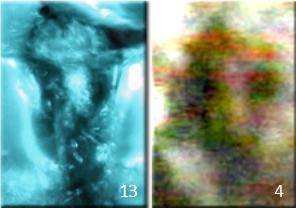
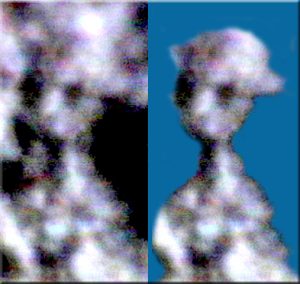
Next is Number (4), the insect-like being. It was recorded by us with a video-loop. It appears to have a bony bump on its head and a relatively long snout. The eyes are big and situated more to the side of the head. It appears to have a long neck.
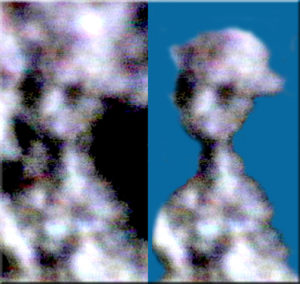
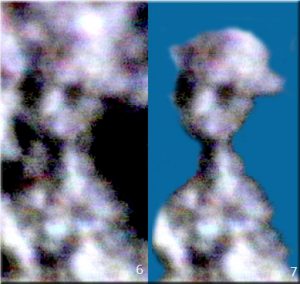
Compare Number (4) with the example (6) on the right. Because of the way video-loop features are formed in optical noise, they are typically partially obscured by untransformed noise. As I remember, the left version may have been adjusted some for contrast but is otherwise unchanged. I have erased the untransformed noise based on my best guess for the version on the right, (7). Consider the version on the right side a suggestion and possibly incorrect. The point is that the Example (4) in the Possible Aliens gallery and version (6) here seem to represent the same species.
Compare (2), the “Gremlin,” recorded by Jose Garrido and Alfonso Galeano with (3), the one recorded by Erland Babcock. Both are video-loop examples. (Both were recorded with component video equipment, as opposed to our modern integrated camcorders.) Note the horizontal pointing ears and round head. Lisa and I recorded a similar figure but it is of such low quality that we dare not try to display it. The important characteristics are the ears, shape of the head and apparent slight build. Our version has a point on the top of its head like a tuft of hair. There may be one in the Babcock version (3), but none is apparent in the Garrido and Galeano version.
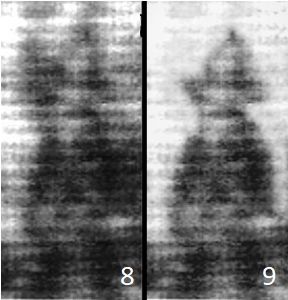
The sitting man shown (5) is also shown in (8) above. While it is common to have distorted features, the very large chin and relatively small scull seems consistent with the rest of the feature. The background has been erased for version (9) to make it a little easier to make out the shape. It may be that we are seeing a bench he is sitting on. If so, I may have erased trees behind him. This was an all-grayscale video frame and it is difficult to know with any certainty.
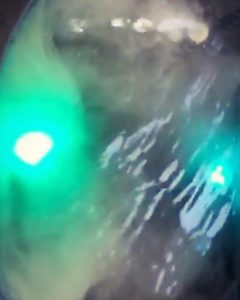
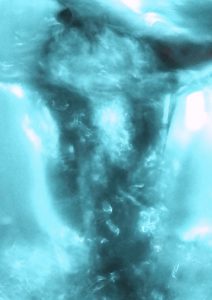
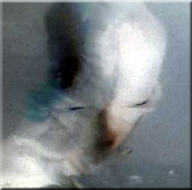
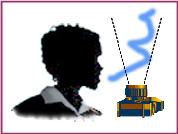
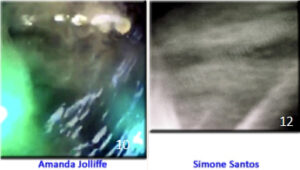
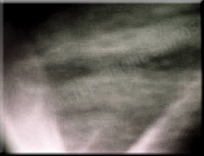
Beings with wedge-shaped heads seem to be pretty common. In Example the (12) by Simone Santos, it appears the head shape may be at least partially an artifact of the technique. We need to learn more to know for sure. Example (10) offered by Amanda Jolliffe compares well with Example (11) in that the brow line and nose ridge both have the same sharp, “Y”-shape. All three have a relatively small mouth.
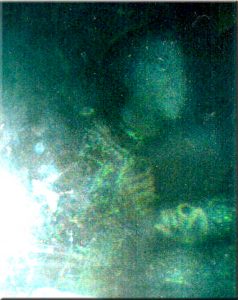
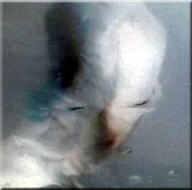
Margaret Downey collected an example using light reflecting from moving water (13). It is shown here with the insect-like being (Example 4) Lisa and I recorded. I am comparing them because both have a longer-than-human snout and eyes at the side of their head. On close examination, Example (13) may have jowls and more of a camel-like face while Example (4) seems more insect-like.
Possible Benefits
Here are the objectives of the study:
Gain further understanding about the paranormality of visual ITC features.
Determine if there is sufficient agreement amongst witnesses to propose that some visual ITC examples may represent one or more ET species.
Determine if it is possible for more than one practitioner to collect one or more examples that are possibly of the same ET species.
If so, determine if there is sufficient information to identify a trend suggesting they are part of an off-world race of beings?
Determine if one or more contactees will recognize any of the possible ET species identified in Item 4.
By contemplating an example that seems to represent an ET species, is it possible for a practitioner to request that their feature appear in a visual ITC session?
Establish a database of possible ET visual ITC examples and reports that is suitable for academic reference.
Given our present level of understanding, it is probably unreasonable to try to develop more information about the examples, but we are not trying to prove the existence of ETs. We are trying to gather information about these features to see if we can establish usefully objective models for them.
Submissions
Here are the current examples that we are asking you to help us grade. You can access the grading web page using the link associated with the “Submission #” entry.
Submission 11 (cc) Tom and Lisa Butler Collected using a video-loop.
Submission 12 (cc) Tom and Lisa Butler Collected using a video-loop.
Submission 13 (cc) Tom and Lisa Butler Collected using a video-loop.
Questions?
There are three very profound points implied by this study. First, it is based on the assumption that visual ITC is a real phenomenon that many people can produce, experience and possibly apply in future studies.
Second, that there is sufficient reason to think some of the examples represent off-world life forms to conduct the study in the first place.
The last point has a direct implication on who we are as life forms. Lacking a physical explanation for the existence of these features, it becomes necessary to seriously consider a nonphysical explanation that may include survived personality.
Your participation in this study by submitting completed forms for one or all of the examples will help us determine the three points are real or fanciful.
Share
We use cookies for security and Adsense, which helps pay for this site. AcceptRejectRead More
Privacy & Cookies Policy
Privacy Overview
This website uses cookies to improve your experience while you navigate through the website. Out of these cookies, the cookies that are categorized as necessary are stored on your browser as they are as essential for the working of basic functionalities of the website. We also use third-party cookies that help us analyze and understand how you use this website. These cookies will be stored in your browser only with your consent. You also have the option to opt-out of these cookies. But opting out of some of these cookies may have an effect on your browsing experience.
Necessary cookies are absolutely essential for the website to function properly. This category only includes cookies that ensures basic functionalities and security features of the website. These cookies do not store any personal information.